1.5 tons
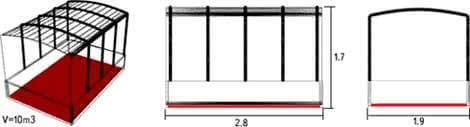
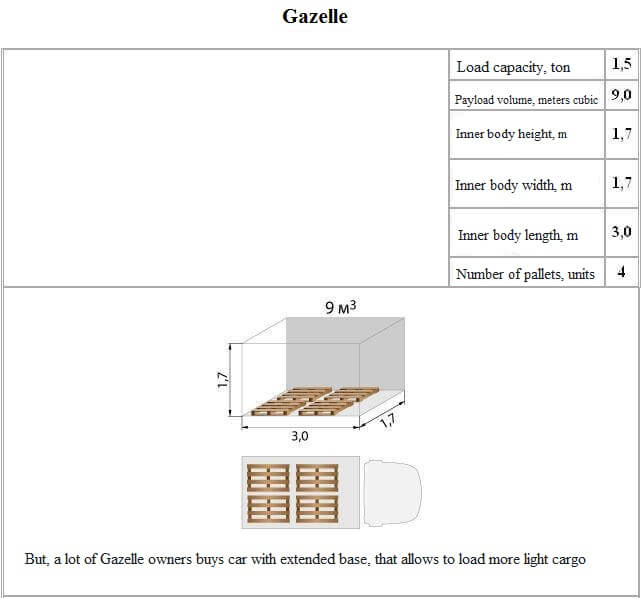
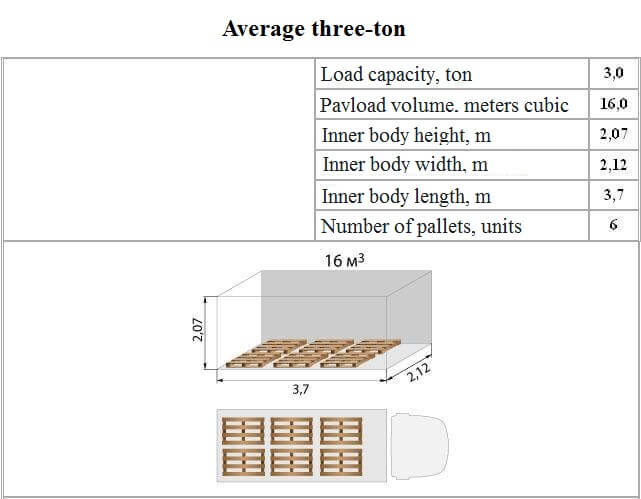
The cargo compartment of the car is a tent, with the possibility of removing the awning, thus obtaining an open cargo compartment. Car attachments may include straps and accessories of another type, such as rigid boards or an elevator.
5 tons
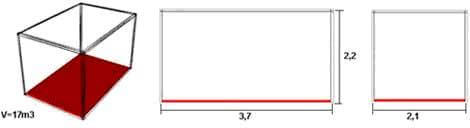
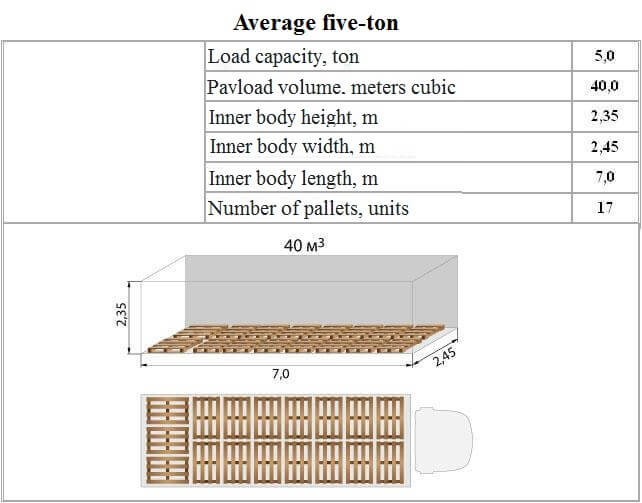
Such cars today are quite often used in international and long distance transportation. Imported models of such trucks are equipped with a pneumatic suspension, which improves the performance of smooth running, and ensures the preservation of fragile loads. Cars can be equipped with lifts. The length of the body of such a car is on average 3.7-6 meters.
10 tons
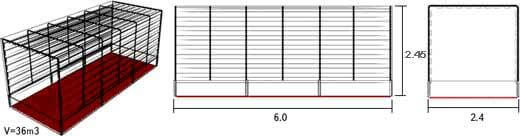
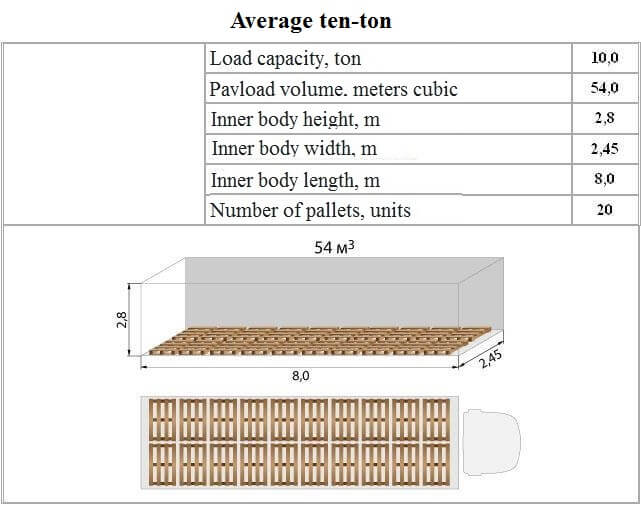
Trucks of this class are often used for international and long distance transportation. In most cases, the cabin is equipped with not only a berth, but also a place for the forwarder. The standard complete set of the truck assumes presence of belts (no more than 6 pieces). The design of the cargo compartment provides several options for loading and unloading (side, top). The complete set of imported trucks of this type implies the presence of a pneumatic suspension, which improves the smooth running of the car, and ensures the preservation of fragile loads. The car can be additionally equipped with an elevator.
20 tons
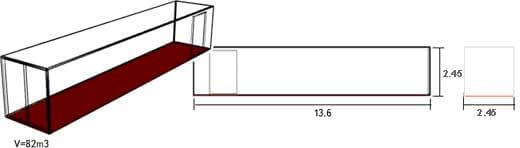
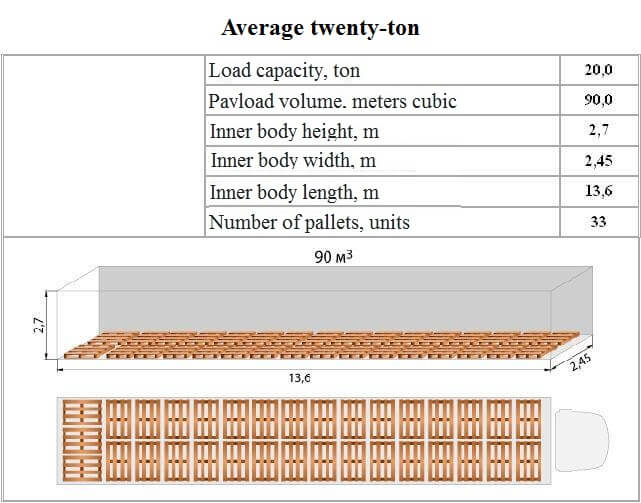
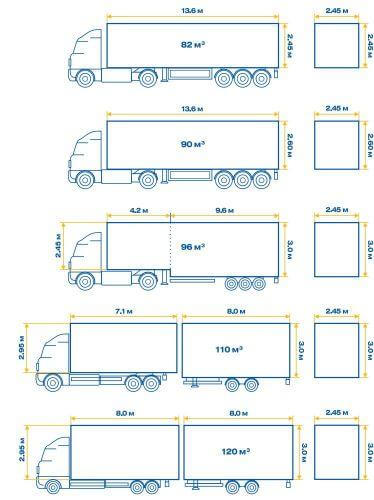
Semi-trailers are available in many modifications, including semi-trailers with a volume from 76 to 78 cubic meters, but with a small length equal to 12.5-13 meters, and semi-trailers with standard or large length, width and height (for example, length the semi-trailer is 13.6-15 meters wide – 2.5 meters wide and 2.7 meters high). The design features of the semi-trailer make it possible to remove the awning, allowing it to unload or load cargo from above or from the side. In addition, semi-trailers without tents can be used as open areas with sides, the height of which can reach 35-50 centimeters.
ALL IN (All Inclusive) – means that the fare includes all additional charges provided by the terms of the carriage. For example, when it comes to freight on LILO terms, this means that the freight rate, in addition to loading, unloading, also includes all related costs, such as BAF, CAF, etc .;
B / L (Bill of Lading) – a shipping bill issued by the carrier of the cargo to the owner of the cargo. Certifies ownership of the shipped goods. It may consist of: the bearer, the name of the recipient (registered), by order of the sender or recipient (warrant);
BAS – base rate;
BAF (Bunker Adjustment Factory) – a bunker surcharge – an additional charge to the base freight rate, the value depends on the cost of fuel in the international market. It can change monthly or quarterly. Usually quoted at TEU (e.g. $ 500 / TEU)
BFR – sea freight;
Booking – booking of all or part of the cargo capacity (space on the ship) for the carriage of cargo;
CAF (Currency Adjustment Factor) is an additional charge to the base freight rate. The value depends on changes in the exchange rate. It can change monthly or quarterly. Usually quoted in% to base freight rate;
Carrier – a person who uses own or leased vehicles to transport goods, on the basis of a contract concluded with the sender;
Charter – an agreement between a vehicle owner and a charterer to lease a vehicle for a fixed term or flight;
C.O.C (Carrier’s Owned Container) – the container is the property of the carrier;
Consignee – consignee;
CUC (Chassis Using Charge) – charge for using the chassis;
CY (Container yard) – container terminal;
DS (Dry container) – type of container (dry container). The container is intended for transportation of “dry” cargoes, which do not require special temperature regime;
DDF (Documentation Fee – Destination) – fee for processing documents at the delivery port;
Demurrage – Penalties charged for the over-use of a container from the time it is unloaded at the terminal until the time it is taken out of the terminal. For ships – payment for idle time of the vessel over agreed time for carrying out loading and unloading operations – fixed time;
DEQ – Delivered Ex Quay (wharf delivery) – Incoterms international trade term. Means the same as DES, except that the risk transfer does not occur until the goods are unloaded at the destination port;
DES – Delivered Ex Ship (delivery from a ship) is a condition of a contract of international sale contained in Incoterms. The seller is considered to have fulfilled the terms of the contract when he provided the customs clearance for import of the goods at the buyer’s disposal on board the vessel at the named port of destination. The seller must bear all the costs and risks of delivering the goods to the designated port of destination before unloading;
Detention – penalties levied on the non-standard use of a container from the moment of its removal from the terminal until the return of the empty container to the port;
DHC (Handling Charge – Destination) – the cost of congestion at the delivery port;
Disbursement Account – a document containing a list of costs that will be incurred for port service;
Discharging – unloading;
DOCS (documentation), DocsFee – local line agent fees for paperwork. Can be charged for both bill of lading and container;
DOOR – delivery from / to the door – the condition of carriage at departure / arrival, which means that the cost of transportation includes the services of departure from / to the front door / warehouse of the sender / recipient;
ETA (Estimated Time of Arrival) – expected arrival date;
ETD (Estimated Time of Departure) – Expected departure date;
Feeder – a sea carrier that transports cargo (containers) on vessels of small displacement, for short distances between ports, usually one pool or delivery of containers from / to the port of loading on an ocean vessel;
FFC (Freight Forwarder Commission / Brokerage – Origin) – Brokerage Commission;
FI (Free In) – Carriage free condition, which means that freight does not take into account the cost of loading onto a ship;
FICY (Free in / Container yard) – loading in the port at the expense of the sender, delivery to the container terminal at the expense of the line;
FIFO (Free in / Free out) – upload and download by the sender;
FILO (Free in / Liner out) – upload from the sender, upload from the line;
FIOS (Free in / out) – upload and download by the sender;
FCL (Full Container Loading) – container filled with single consignee cargo;
FO (Free Out) – unloading – a condition of carriage which means that the freight does not take into account the cost of unloading from the ship;
Freight – freight charge;
GRI – planned increase of base rate from a certain date;
Gross Weight (gross weight) – the mass of the goods together with the packaging of the inner (inseparable from the goods before its consumption) and the outer – packaging (boxes, sacks, barrels, etc.);
HC (High Cube) – container type. Container (High Cube Container) of increased capacity due to increased height compared to the standard container;
Heavy Lift Charge – allowance for excess weight;
IMO Surcharge – Dangerous Goods Allowance;
Indossament – an inscription on the back of a security whereby the rights in that security pass from one person to another. The endorser is called the endorser. Distinguish full (nominal) endorsement and bearer, when the transfer letter does not contain the name in favor of which the endorsement is made, that is, it consists of one signature of the endorser. The objects of transfer by endorsement may be promissory notes, checks, bills of lading, etc. securities;
International Commercial Terms, INCOTERMS (Incoterms) is a collection of international trade terms issued by the International Chamber of Commerce. The glossary provides terms on basic terms of deliveries relating to the transport process, registration of deliveries, etc .;
ISPS – port security fee;
LCL (Less Container Loading) – container filled with cargo for different recipients, groupage cargo;
LI (Liner In) – linear loading conditions, which means that the cost of loading on a vessel is included in the freight rate;
LI-Door (Liner in / Door) – loading in port through the line, delivery to the client’s “door”;
LIFO (Liner in / Free out) – download from the line, upload from the sender;
LILO (Liner in / out) – loading and unloading at the expense of the line, ie included in the freight rate – complete linear conditions;
LO (Liner Out) – linear conditions on arrival, which means that the cost of unloading from the ship is included in the freight rate;
Loading – loading of cargo;
Manifest – a document containing a list of bills of lading and presented to customs, as well as agents and stevedores at destination ports. Usually it includes the following information: name of the ship, port of loading, bills of lading, name, weight, volume and quantity of cargo for each bill of lading, name of consignors and consignees of cargo, marking of cargo;
Laytime – the period during which the carrier provides the vessel for loading the cargo and holds it under the loading of the cargo at no additional cost to the freight charge, is determined by the agreement of the parties in the charter, in the absence of such agreement by terms usually accepted in the port of loading;
Notify party – the party that the carrier must notify when the goods arrive. Usually the forwarder or other representative of the recipient in the port;
ODF (Documentation Fee – Origin) – fee for processing documents at the port of departure;
OT (Open Tor) – container type. Container with open top to facilitate loading, closed with tarpaulin cover;
OHC (Handling Charge – Origin) – the cost of congestion at the port of departure;
Order bill of lading – a bill of lading on which the goods are transmitted either “on the order” of the shipper, or “on the order” of the consignee, or “on the order” of the bank, or on the transfer inscription of the person whose “order” he was drawn up. If the order of the bill of lading does not state that it was drawn up “on the order” of the recipient, then it is considered that it was drawn up “on the order” of the sender. The bill of lading and, accordingly, the right of cargo to the other person is transferred by means of a transfer sign – endorsement;
POD (Port of Delivery) – destination port;
POL (Port of Loading) – loading port
PSE (Port Security Charge – Export) – port security fee for export;
PSS (Peak Season Surcharge) – an allowance due to seasonal increase in traffic during certain seasons;
PCS (Port Congestion Surcharge) – allowance due to congestion of port container areas;
Quality Certificate – a document certifying the conformity of a product with quality indicators, specifications, safety requirements for life and health of people, the environment, stipulated in the contract;
RF (Reefer container) – type of container. The refrigerator container is intended for transportation of the cargoes demanding observance of temperature regime;
SEA (sea freight), OF (ocean freight);
Certificate of Origin (Certificate of Origin) – a certificate that certifies that the imported product is manufactured at that location;
SEC (security charges) – port security charge;
Shipper – sender of cargo;
S.O.C (Shipper’s Owned Container) – the container is the property of the customer;
Statement – a document that is prepared instead of timeshare in cases where there are no necessary conditions for accounting and calculation of stable time. Contains information about the time of arrival at the port, the use of fixed time, indicating the duration and reasons for interruptions and downtime. According to the state-of-the-art timeshare is made and calculations are carried out with charterers on demerredge and dispatch;
Storage – rate for over-standard storage of cargo in port. It is calculated from the moment of unloading to the terminal until the time of removal from the terminal. It is calculated at port rates. Usually quoted on a TEUand has a growing scale (the longer the cargo is in port, the more expensive each subsequent day of storage;
S.T.C. (Said To Contain) – stated containing;
TC (Tank container) – type of container. The tank container is intended for transportation of gases and liquid cargo;
TEU (Twentyfoot Equivalent Unit) is a unit of measure equal to the volume of a 1 x 20 foot container. 1×40 foot container = 2TEU;
THC (terminal handling charges) – port congestion costs;
Time charter – time charter contract. The shipowner shall provide the vessel charterer with a fixed term fee for a fixed fee. Typically, the time charter assumes that the shipowner bears the cost of maintaining the crew, maintaining the ship in a serviceable condition and insuring it, and the charterer, in addition to paying the shipowner for the use of the ship, assumes the payment of the bunker, water, port, ducting and other running and operating costs;
Time sheet – Timesheet accounting for steady-state time under freight operations. The timesheet is drawn up at each port of unloading / loading of the vessel and signed by the master and the charterer’s representative. Timeshare is the basis for calculating demurrage and dispatch;
WarRisk – military risks collected at ports located in a war zone;
Waybill (invoice) – a document that documents the release and receipt of various goods, as well as the transportation of goods. Regulates relations between the sender, the carrier and the consignee;
Wharfage – port duty;
WSC (Winter Surcharge) – winter surcharge, charged at ports where there is a possibility of freezing the water area of the port. Valid in winter.
Sites for counter-party verification
BELGIUM
www.eurodb.be – information is provided in English, you need to register for information
BULGARIA
http://nap.bg/page?id=139 – information is submitted in Bulgarian language, subscription for information on registration of new legal entities is possible
UNITED KINGDOM
www.companieshouse.gov.uk – the information is free, submitted in English
ESTONIA
https://ariregister.rik.ee/index.py?lang=eng&sess – the information is free, submitted in English
IRELAND
www.cro.ie – information is provided in English, business registration information is free, more information is paid
CYPRUS
http://www.drcor.mcit.gov.cy/portal/page/portal/ – the information is free, submitted in English
LATVIA
https://www.lursoft.lv/data_bases_of_companies
http://www6.vid.gov.lv – information is free, submitted in Latvian
http://www6.vid.gov.lv/VID_PDB/PVN – information is free, submitted in Latvian
http://www6.vid.gov.lv/VID_PDB/AP – information is free, submitted in Latvian
LITHUANIA
http://www.registrucentras.lt/jar_p_en/ – the information is free, submitted in English
https://www.kvk.nl/handelsregister/zoekenframeset. – The information is free, submitted in Flemish
GERMANY
www.handelsregister.de – information is provided in English, business registration information is free, more information is paid
NORWAY
http://w2.brreg.no/kunngjoring/index.jsp?spraak=en – Information is free, submitted in English
ROMANIA
http://recom.onrc.ro/ – information provided in Romanian
SINGAPORE
https://www.psi.gov.sg/NASApp/tmf/TMFServlet?app – the information is free, submitted in English
SLOVAKIA
http://www.orsr.sk/search_subjekt.asp?lan=en – information is free, available in English
http://www.zrsr.sk/default.aspx?LANG=en – information is free, available in English
SLOVENIA
http://www.ajpes.si/Registers/ePRS – information is available in English, business registration information is free, more information is paid
HUNGARY
www.e-cegjegyzek.hu/info/page/ceginfo – information available in Hungarian
www.cegtalalo.hu – information available in Hungarian
FINLAND
http://www.ytj.fi/english/ – information is free, available in English
FRANCE
www.infogreffe.fr/infogreffe/index.jsp – information is available in English, business registration information is free, more information is paid
SWITZERLAND
www.zefix.admin.ch – information is free, available in English
SWEDEN
https://foretagsfakta.bolagsverket.se/fpl-dft-ext-web/ – information is free, available in English
CROATIA
www.biznet.hr – the information is available in Croatian
CZECH REPUBLIC
http://justice.cz – information available in Czech
http://portal.justice.cz/Justice2/Uvod/uvod.aspx – information available in Czech
EUROPEAN COMMISSION WEBSITE (database of companies registered and operating within the EU)
http://ec.europa.eu/taxation_customs/vies/vieshome.do?selected– information is free, available in English
REGISTER OF ENTERPRISES WORLDWIDE
http://www.companieshouse.gov.uk – information is available in English, business registration information is free, more information is paid
http://www.bvdinfo.com/Products/Company-Information – the information is available in English
Our experts will help you in obtaining:
-Sanitary-hygienic conclusion;
-Assessment of conformity;
-Quarantine certificate;
-Permits of UCRF.
Depending on the category of goods being transported, there is a need to undergo appropriate controls, which in turn creates the need for cooperation with the list of organizations:
-CCI of Ukraine;
-SES;
-bodies of standardization, certification and metrology;
– SSU;
-phytosanitary service;
-Ministry of Energy and Environment of Ukraine;
-other centers and bodies.
For the import and export of goods, the list of required documents is different, as is the list of required permits, certificates and payment for accompanying services.
Cargo marking
The purpose of marking is to visually show the following mandatory requirements:
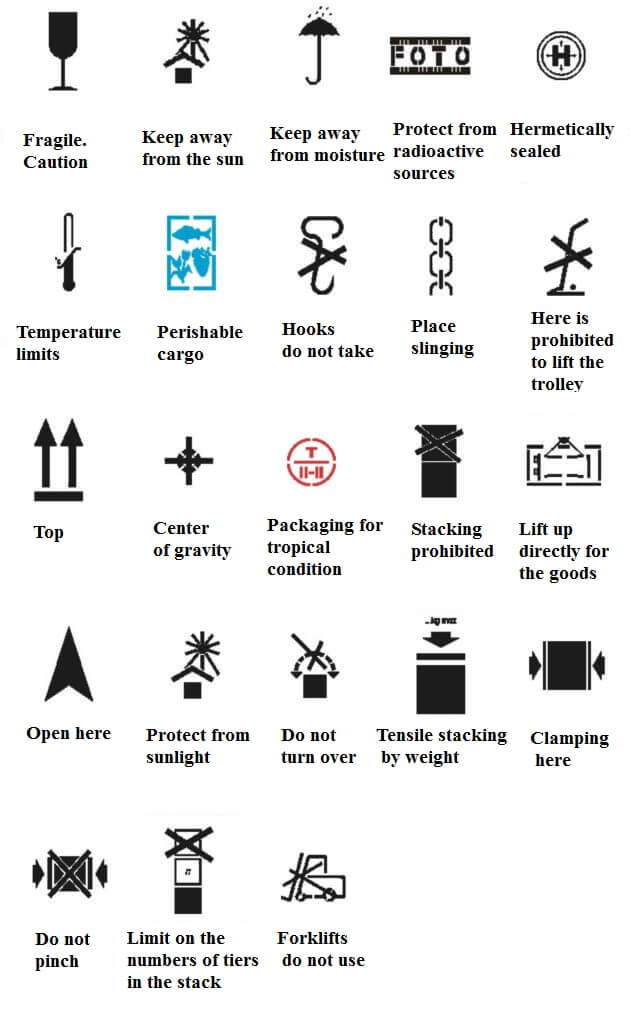
Correct, clear labeling of goods is a prerequisite for their fast delivery while maintaining quality during transportation. Currently, there are different product, shipping, special and transport markings. Sending, product and special markings are applied by the consignor, transport – by the carrier or its agent. Depending on the terms of the contract of sale, the marking usually contains the following data:


